

Introduction to Audiovisual Stimulation (AVS)
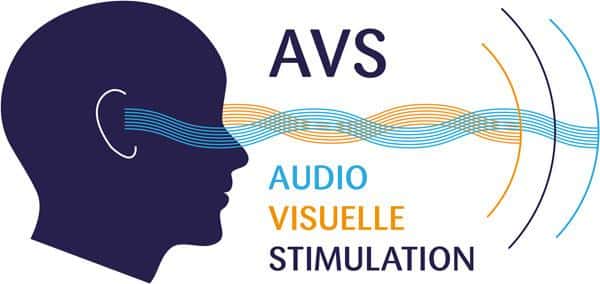
Audiovisual stimulation (AVS) works with rhythmic light and sound pulses presented at a defined frequency. The stimuli are perceived through special glasses and headphones; the frequencies are intended to accompany brain activity. AVS is used, among other things, for relaxation and mental attunement (brainwave entrainment).
What is audio-visual stimulation?
The principle of audio-visual stimulation is based on stimulating the central nervous system with specific light and sound signals. A mask or pair of glasses in front of the user’s eyes produces flashing light signals at defined frequencies, accompanied by specific tones through headphones. Depending on the type of light and sound signals, the brain is stimulated in different ways.
As a comparison, think of the calming effect of a flickering, crackling camp fire. The effect of audio-visual stimulation is considerably stronger, though. Besides the subtle effect of light and sound, shielding the user from their surroundings plays a part, as does the pleasant music that can be added.
What areas of application are there?
Mental fitness and vitality:
- Increased concentration, perception and memory
- Overcoming tiredness and exhaustion
Relaxation and stress management
- Inducing deep relaxation
- Increasing resistance to stress
Meditation, mental training, trance & hypnosis:
- Inducing meditative and trance-like states
- Promoting creativity and the generation of ideas
- Using the hypnagogic state for auto-suggestion and affirmation
Sleep:
- Overcoming problems with falling asleep and sleeping through the night
- Promoting healthy and restful deep sleep
Therapeutic support for:
- Stress-related disorders and nervousness
- Tinnitus
- ADD and ADHD
- Symptoms of dementia
- Depression and anxiety
- Pain (especially fibromyalgia)
- High blood pressure
- Sleep disorders






All images from: © www.ingimage.com
Distinction from neurofeedback and biofeedback
Audio-visual stimulation is, as the name suggests, a stimulating method. As a result, its effect is largely confined to the time of use and a few hours afterwards.
Neurofeedback and biofeedback, by contrast, are methods that involve a learning process which can continue to have an effect over weeks, months and years.
Although the fields of application overlap, audio-visual stimulation is essentially characterised by its relaxing effect, while biofeedback and neurofeedback offer far more specific possibilities.
Audio-visual stimulation is quick, inexpensive and easy to use, which makes it particularly interesting for private users. It is often an ideal complement to biofeedback and neurofeedback.
Research on audio-visual stimulation
The effect of audio-visual stimulation has been examined extensively in scientific studies. Electroencephalography (EEG) has shown changes in brain waves in response to the visual and auditory stimuli (1, 2).
Clinical studies have shown improvements in stress and anxiety, pain relief, and positive effects on behavioural problems and difficulties with concentration (3).
In a study on migraine and tension headache, a reduction in pain intensity was achieved in 49 of 50 patients; in 36 patients the migraine disappeared completely (4).
The University of Hamburg has been working with audio-visual stimulation in the treatment of tinnitus patients for many years (5). The stimulation settings for the tinnitus programmes were kindly made available to us by Prof. Dr. Dipl.-Psych. S. Tönnies.
(1) Collura, T.F. (2001). Application of repetitive visual stimulation to EEG neurofeedback protocols. Journal of Neurotherapy, 6(1), 47-70.
(2) Frederick, J.A., Timmerman, D.L., Russell, H.L., & Lubr, J.F. (2004) EEG coherence effects of audio-visual stimulation (AVE) at dominant and twice dominant alpha frequency Journal of Neurotherapy, 8(4), 25-42.
(3) Huang, T.L., & Charyton, C. (2008) A comprehensive review of the psycholo gical effects of brainwave entrainment. Alternative Therapies in Health and Medicine, 14,5.
(4) Anderson, D. (1989) The treatment of migraine with variable frequency photic stimulation. Headache, 29, 154-155.
(5) S. Tönnies (2006) Entspannung für Tinnitusbetroffene durch Photostimulation. HNO 2006 · 54:481–486
How long does a session last?
A session usually lasts between 15 and 60 minutes, depending on the purpose. 15 minutes should be the minimum so that the effects can set in. Sessions longer than 60 minutes are usually not necessary.
How often should sessions be carried out?
Many users apply audio-visual stimulation daily, but weekly use already brings the desired effects. Duration and intervals can be adapted to a changing daily routine without difficulty.
Are there side effects?
People with epilepsy and photosensitive individuals must not use audio-visual stimulation devices, as these may trigger an epileptic seizure. Use must be stopped immediately if the person feels unwell. Otherwise no side effects are known.