Search

Recommended Neurofeedback Books

There are two recommendable books on the subject of neurofeedback on the German book market (as of 2014).

However, it is also advisable to purchase one of the recommendable English-language books. These usually offer an even more up-to-date and far-reaching overview of the topic. Besides “Getting Started with Neurofeedback”, the “Handbook of Neurofeedback” would also be suitable for an introduction. For advanced users we recommend the book “Introduction to Quantitative EEG and Neurofeedback: Advanced Theory and Applications”.

Bücher zu Neurofeedback:

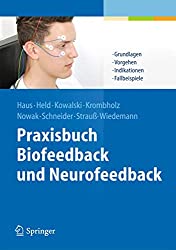
Praxisbuch Biofeedback und Neurofeedback
by Karl-Michael Haus, Carla Held, Axel Kowalski, Andreas Krombholz, Manfred Nowak, Edith Schneider, Gert Strauß, Meike Wiedemann

  • Paperback: 300 pages
  • Publisher: Springer; 2013 edition (13 December 2012)
  • Language: German

In this practical handbook the authors present all the important bio- and neurofeedback methods, from how they work to how they are carried out. The many applications in prevention and therapy are covered comprehensively, with case studies and numerous illustrations. The book gives a good overall picture of what biofeedback & neurofeedback can do and is reasonably priced on top of that.

Neurofeedback: Theoretische Grundlagen – Praktische Vorgehen – Wissenschaftliche Evidenz
by Ute Strehl (ed.)

  • Paperback: 272 pages
  • Publisher: W. Kohlhammer; 1st edition (28 February 2013)
  • Language: German

Dr Strehl and her co-authors give an overview of the foundations of neurofeedback, its use with various clinical pictures, and practical aspects of training and application. The book is well researched, cites many of the well-known studies and offers a detailed bibliography for every chapter.

Compared with „Praxisbuch Biofeedback und Neurofeedback“ this book is more sober and perhaps more firmly grounded in research.

Getting Started with Neurofeedback
by John N. Demos

  • Hardcover edition: 304 pages
  • Publisher: W W Norton & Co; Edition: New. (January 2005)
  • Language: English

A book to start with, which deals with neurofeedback in an all-encompassing way. If you are not put off by the English language, you will find a good overview of all the possibilities that neurofeedback offers.

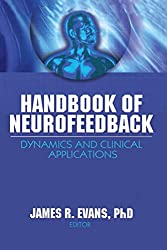
Handbook of Neurofeedback: Dynamics and Clinical Applications
by James R. Evans

  • Paperback: 406 pages
  • Publisher: Crc Pr Inc; Edition: New. (October 2007)
  • Language: English

This book is equally a suitable work to start with on the subject of neurofeedback. It gives a great overview and is well researched. You should choose between “Getting Started with Neurofeedback” and this book, because they are similar in many parts. The “Handbook of Neurofeedback” is a bit more up to date and also more than twice as expensive. Whether the higher investment is worth it is a matter of taste.

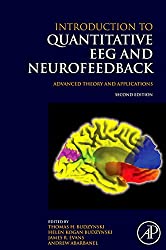
Introduction to Quantitative EEG and Neurofeedback: Advanced Theory and Applications
by Thomas H. Budzynski

  • Hardcover edition: 250 pages
  • Publisher: Elsevier Ltd, Oxford; Edition: 2nd edition. (January 9, 2009)
  • Language: English

If you are already familiar with neurofeedback from the theoretical side and from the practical side, you should definitely read this book. It gives a deeper insight into well-known topics around neurofeedback and above all it deals with new approaches in treatment fields such as pain, Asperger’s syndrome, depression, addiction, and many more. It is very well researched and written with high quality articles. A must buy for every advanced neurofeedback user.

Bücher zum Thema Elektrophysiologie, EEG, Diagnostik:

Klinische Elektroenzephalographie
by Stephan Zschocke, H. C. Hansen

  • Hardcover: 655 pages
  • Publisher: Springer; 3rd, revised and expanded edition 2012 (28 October 2011)
  • Language: German

The book on electroencephalography. It covers all the fundamentals of the EEG, a wide range of pathologies and even technical aspects in detail. At EUR 180 it carries a hefty price tag, but it is the undisputed reference in this field.

Leitfaden für die EEG-Praxis. Ein Bildkompendium
by Mitsuru Ebe, Isako Homma

  • Paperback: 370 pages
  • Publisher: Urban & Fischer Verlag/Elsevier GmbH; 3rd edition (12 April 2002)
  • Language: German

Another recommendable introduction to the EEG, with many examples of recordings and various pathologies. It is considerably cheaper than the reference work „Klinische Elektroenzephalographie“, which also means less detail on roughly half the number of pages. It does not cover every area that Stephan Zschocke’s work does.

Elektrophysiologie in der Praxis: Neurographie, Evozierte Potenziale und EEG
by Volker Mink

  • Paperback: 408 pages
  • Publisher: Urban & Fischer Verlag/Elsevier GmbH; 2nd edition (17 August 2012)
  • Language: German

If you are interested in the other areas of neurophysiology alongside the EEG, this book is well worth reading. The EEG itself is still covered in sufficient depth.